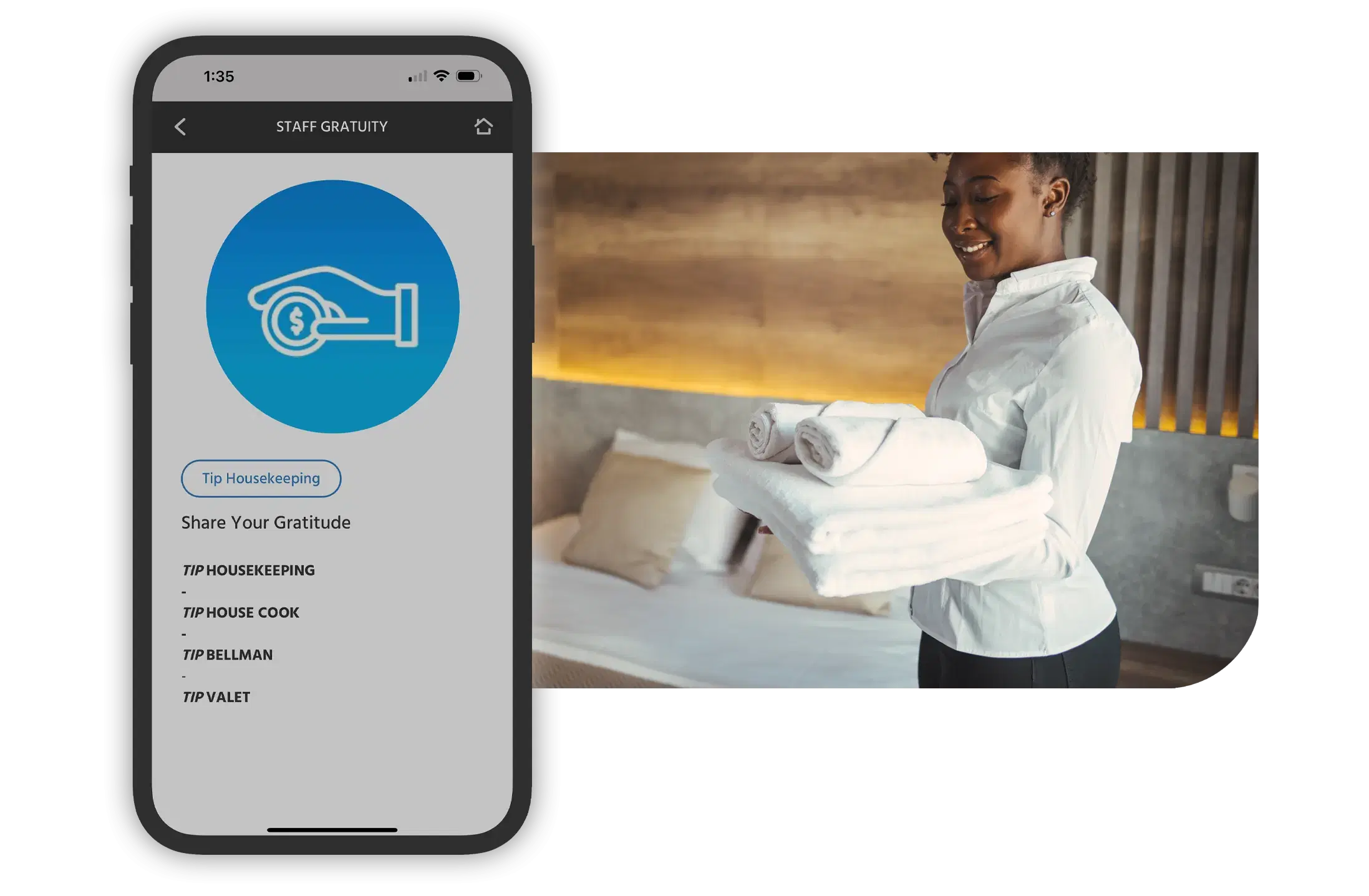
Plain-language federal rules every hotel pool should respect
Tip pooling is legal in the United States when it follows a few core federal rules: tips are the property of employees, managers and supervisors may not take from a mandatory pool, and accurate records must be kept. This page is general information, not legal advice; confirm your specific setup with employment counsel.

How does tip pooling compliance work?
Tip pooling rules vary by jurisdiction and generally govern who may share a pool and how it is split and recorded. This is general information, not legal advice. NexGen Guest supports administration with configurable split rules, per-employee attributed records, and exports that feed payroll, so distributions are transparent and auditable.
The federal baseline comes from the Fair Labor Standards Act (FLSA), and states are free to layer stricter rules on top of it. Hotels feel this more than most businesses because a single property spans many roles - housekeeping, bell, valet, front desk, F&B, and spa - with different tipping customs and, often, different wage structures. A pool that mixes those roles without checking the rules first is where problems usually start.
See how rule-based tip pooling works
Every tip is captured with a timestamp and a recipient - a named employee or a defined pool - so who got what, and when, is never a reconstruction exercise.
Pooled tips are distributed by configured rules - evenly or by percentage - that staff and auditors can both inspect, instead of spreadsheet math nobody can retrace.
Scheduled CSV exports and gratuity reporting by department, staff member, and date give you the paper trail recordkeeping duties assume you have.
Earnings records flow toward payroll through payroll-oriented exports, so what was pooled, what was paid, and what was reported stay consistent.
Everything on this page describes U.S. federal-level basics in plain language. It is general information, not legal advice, and it doesn’t account for the state and local rules that govern your properties - which in this area differ in ways that matter. Before creating or changing a tip pool, consult qualified employment counsel. What we can help with is the operational half: making every gratuity in your digital tipping program recorded, attributed, and exportable from day one.
On our roadmap: Something the industry hasn't seen yet. Digital tipping that gets as close to the feel of paper tipping as possible. Talk to us about what's coming.
Tip pooling compliance is one part of digital tipping for hotels. Dig into the related pieces, or see the product and book a demo.

With NexGen, the entire InterContinental Miami experience is at your fingertips! Simply scan the QR code to access everything from menus and in-room dining to valet requests—all in five languages. The ultimate convenience, right in the palm of our guest hands.
.0xmd--vl5-u6i.png&w=640&q=75)
Gina Genna
Director of Marketing
InterContinental Miami Hotel

From enhanced staff coordination to smoother guest communication, the impact has been massive – one of our biggest operational wins of 2023 boosting efficiency, improving guest satisfaction, and driving real results. We're excited to carry this success into 2024 and beyond.

Jeremy Zuber
Resort Manager
Round Hill Hotel & Villas

We are able to promote and sell our yoga and meditation classes and our drive-in movies without spamming them with text. NexGen Guest has helped us inform the guest pre-arrival and inform and promote all activities on property

Natasha Matekha
Sales & Marketing
Hollywood Roosevelt

We are not taking full advantage of that, but we do have a link in the compendium for our Mercantile shop and Guests click shop now. The data shows that it definitely drives revenue in our e-commerce store via the compendium

Jennifer De Vito
Marketing & Communications
Post Ranch Inn, Big Sur
NexGen Guest doesn't replace legal advice - it makes the operational half easier. Every gratuity arrives timestamped and attributed to a named employee or a defined pool, pooled tips follow a configured, visible rule rather than back-office arithmetic, and exportable reports give payroll and auditors the same numbers staff see on their dashboards.
Yes - tip pooling is legal under U.S. federal law (the Fair Labor Standards Act) when it follows the core rules: tips belong to employees, managers and supervisors may not take a share of a mandatory pool, and accurate records must be kept. States can impose stricter requirements, so a pool that’s compliant in one state may need adjusting in another. Confirm your specific arrangement with employment counsel.
No - under federal law, managers and supervisors may not keep any portion of employees’ tips or receive distributions from a mandatory tip pool. The generally recognized exception is a tip a guest gives a manager directly for service that manager personally and solely provided. Who counts as a “manager or supervisor” is defined by duties, not job title, which is a common compliance trap.
It depends on how the employer pays its staff. Federal rules distinguish between pools limited to employees who customarily and regularly receive tips, and - where the employer pays full minimum wage and takes no tip credit - broader pools that may include certain non-tipped, non-managerial staff. Because eligibility turns on wage practices and state law, hotels should map their roster with counsel before configuring a pool.
The treatment of card processing costs varies by state. Some states allow an employer to pass a proportional share of the processing cost through to the tip; others prohibit any deduction from an employee’s gratuity. There is no single nationwide answer, so check the law of each state where you operate before touching a card tip.
At minimum: what tips were received, when, and by whom; how pooled amounts were calculated and distributed to each participant; and payroll records reflecting what each employee was ultimately paid. Clear, consistent records are what resolve disputes and answer auditors - an undocumented pool is a liability even when the split itself was fair.
Every digital tip arrives timestamped and attributed - to a named employee or a defined pool - and distribution follows a configured, visible rule rather than back-office arithmetic. Exportable reports then give payroll and auditors the same numbers staff see on their dashboards. Software doesn’t replace legal advice, but it makes the recordkeeping side dramatically simpler.
See how attributed tips, rule-based pooling, and exportable reports keep your gratuity records audit-ready.
Book a Demo