

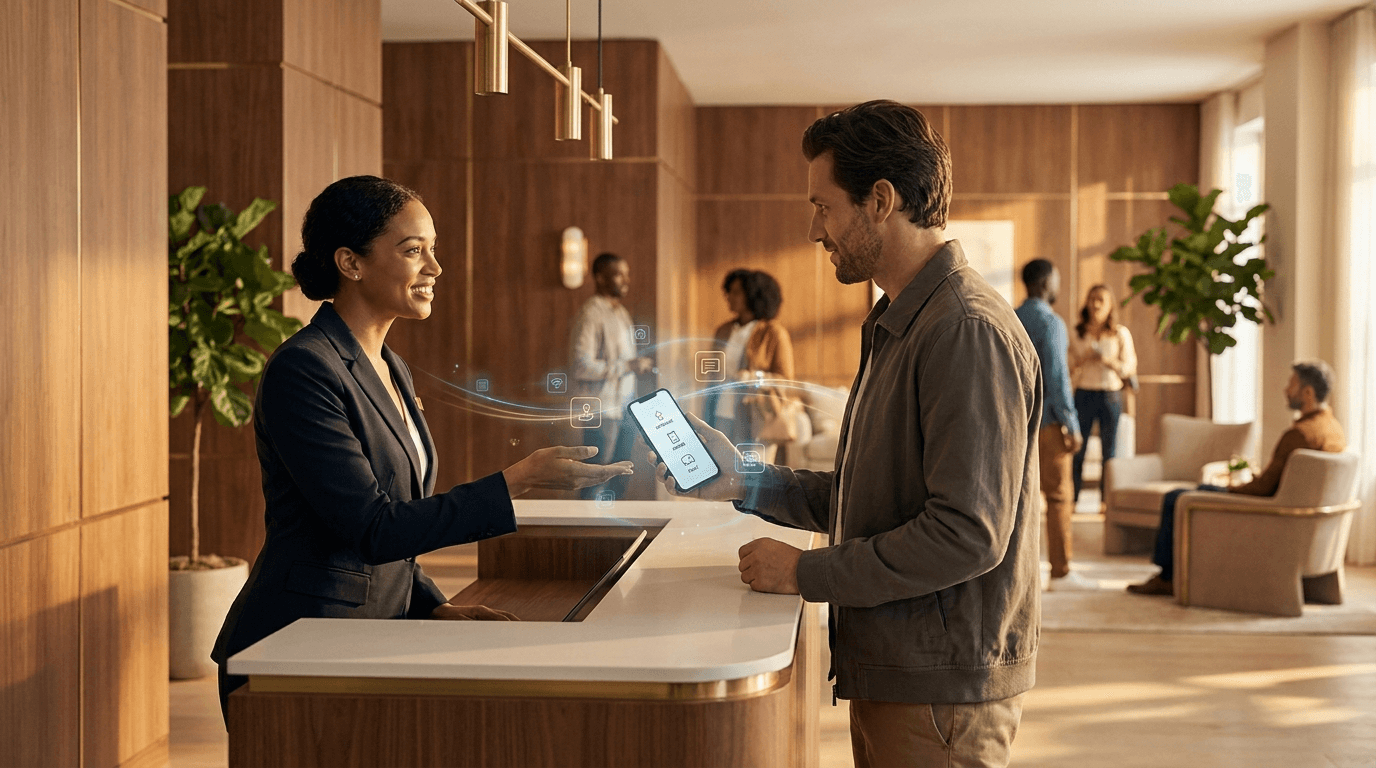
The Front Desk Is Already Your Most Valuable Revenue Channel
Every hotel wants more revenue per guest. But most hotels are trying to solve that problem in an expensive way.
They hire more staff. They add more manual work. They train the front desk team to “sell harder.” They print more menus, promote more packages, and hope guests notice the right offer at the right time.
But the most effective hotel front desk upselling strategy does not start with more labor.
It starts using the guest journey you already have.
From booking to check-in, from room to checkout, every guest creates multiple revenue opportunities. The problem is that many hotels only try to upsell at one moment: when the guest is standing at the front desk.
By then, the guest may be tired, the line may be long, the agent may be busy, and the opportunity may already be lost.
That is why smarter hotels are moving from manual upselling to a no-new-staff upsell system. They are using pre-arrival offers, guest messaging, digital compendiums, mobile menus, QR codes, and automated workflows to increase guest spending without adding pressure to the team.
So, the question is no longer:
“How do we get the front desk to sell more?”
The better question is:
How do we build a guest revenue system that works even when the front desk is busy?
That is where a modern hotel guest engagement platform like NexGen Guest becomes a revenue advantage.
What is Hotel Front Desk Upselling?
Hotel front desk upselling is the process of offering guests a better room, premium service, paid amenities, or enhanced experience during the guest journey.
Common hotel upselling examples include:
- Room upgrades
- Early check-in
- Late checkout
- Breakfast packages
- Parking
- Airport transfers
- Spa appointments
- Food and beverage credits
- Welcome amenities
- Local experiences
- In-room dining
- Premium room views
- Business traveler add-ons
Traditionally, front desk upselling happens during check-in. A guest arrives, the agent checks availability, and then offers a paid upgrade or add-on.
That still works.
But it is no longer enough.
Modern guests expect convenience before they arrive, during their stay, and even after checkout. That means hotel upselling should not depend on one conversation at the front desk. It should be built into the full guest journey.
The best hotel upselling strategy combines three things:
- Timing: Presenting the offer when the guest is most likely to say yes.
- Relevance: Showing offers that match the guest’s reason for travel.
- Ease: Making it simple for the guest to accept the offer from their phone.
NexGenGuest is built around this exact idea: the guest journey begins at booking, and hotels can use mobile-first guest engagement to boost revenue, improve satisfaction, and reduce operational friction.
Why Hotels Need a No-New-Staff Upsell Strategy
Hotels are under pressure from every direction.
Labor costs are high. Staffing gaps remain difficult. Guests expect faster service. Owners want better margins. Revenue managers want more income beyond room rates. Front office leaders want less pressure on their teams.
Adding staff is not always possible.
But increasing guest spend is.
That is the opportunity behind the “$0 front desk upsell.”
The term does not mean the guest pays $0. It means the hotel uses assets it already must generate more revenue:
- Existing rooms
- Existing amenities
- Existing menus
- Existing spa services
- Existing parking
- Existing guest data
- Existing communication channels
- Existing front desk workflows
- Existing QR codes
- Existing mobile guest touchpoints
The hotel is not creating an entirely new department. It is turning existing guest touchpoints into revenue moments.
That is the difference between a manual upsell attempt and a scalable upsell system.
A manual upsell depends on whether the front desk agent remembers to ask.
A system makes sure the right offer reaches the right guest at the right time.
The Problem with Traditional Front Desk Upselling
Most hotels do not fail at upselling because their staff is bad at selling.
They fail because the process is inconsistent.
Some agents are confident. Others are not. Some guests arrive during quiet hours. Others arrive during a rush. Some offers are mentioned. Others are forgotten. Some upgrades are available. Others are not communicated clearly.
The result is unpredictable revenue.
Traditional front desk upselling often breaks down because:
- Agents are focused on check-in speed
- Guests do not want a sales pitch after travel
- Upsell options are not clearly packaged
- There is no automated pre-arrival offer
- The front desk does not always know guest intent
- Staff may not feel comfortable selling
- There is no easy way to track conversion
- Offers are not presented consistently
The goal is not to replace hospitality.
The goal is to give the front desk a better system.
A better system helps hotels sell without being pushy, serve without slowing down, and increase revenue without adding staff.
The 5 Guest Spend Moments Most Hotels Miss
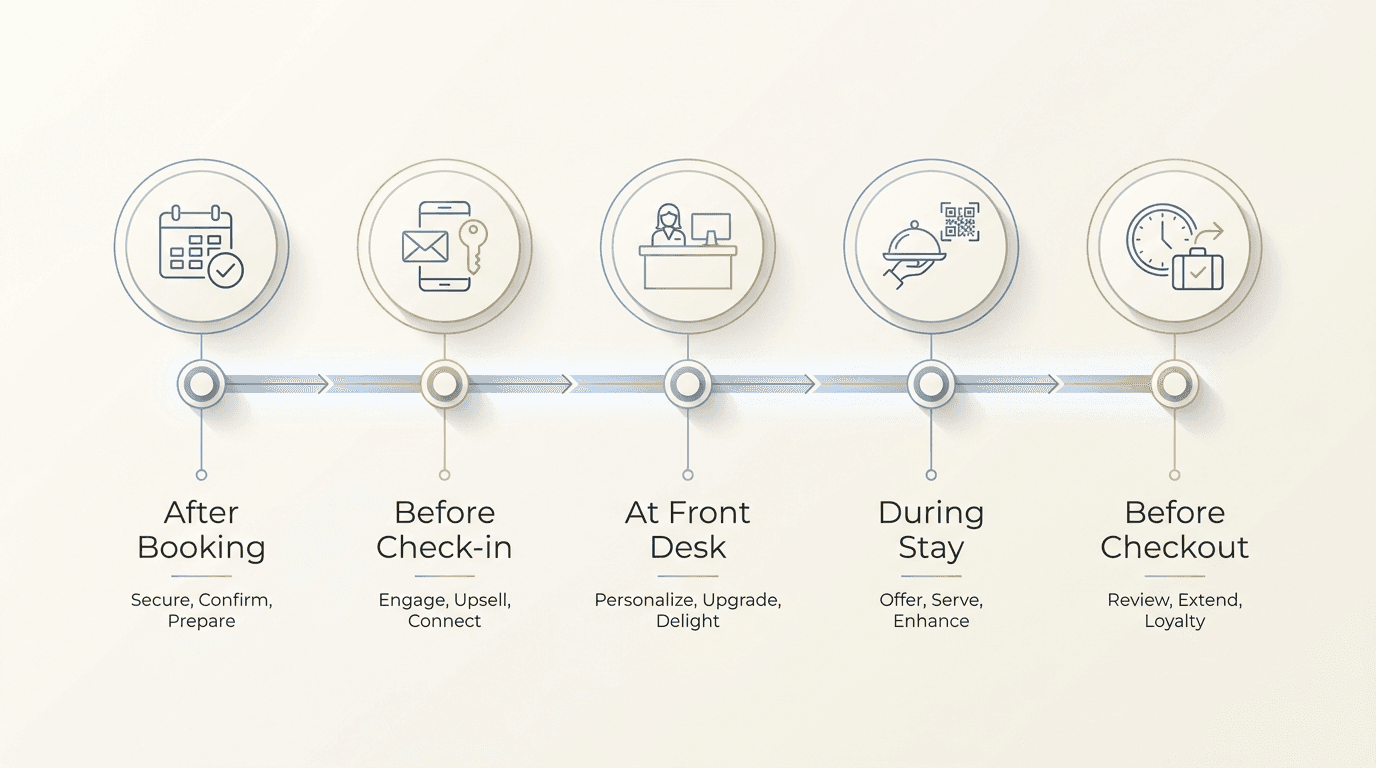
A guest’s spending journey does not begin at check-in.
It begins the moment they book.
Hotels that only upsell at the front desk miss several high-value moments before and during the stay.
1. Right After Booking
This is one of the best moments to engage the guest. The guest has already committed to the stay and is actively thinking about the trip.
This is the right time to offer:
- Room upgrades
- Early check-in
- Breakfast packages
- Airport transfers
- Parking
- Welcome amenities
- Local experiences
- Spa appointments
With a pre-arrival upsell solution, hotels can send guests mobile-friendly offers through SMS or email before they arrive. Guests can browse upgrades, amenities, transportation, and add-ons from their phone without downloading an app.
This turns the period between booking and arrival into a revenue opportunity instead of a quiet waiting period.
2. Before Check-In
The 24–72 hours before arrival are powerful because the trip feels real. Guests are planning logistics, arrival time, meals, parking, and activities.
This is when a hotel can ask:
“Would you like to add breakfast for your stay?”
“Would you like early check-in if available?”
“Would you like to reserve parking before arrival?”
“Would you like to upgrade to a room with more space?”
This reduces check-in friction and gives the hotel more time to prepare.
For the guest, it feels convenient.
For the hotel, it creates more predictable ancillary revenue.
3. At the Front Desk
The front desk still matters.
But instead of making the front desk carry the full upsell responsibility, hotels should use it as a confirmation and personalization point.
For example:
“I see you were looking at our premium room upgrade before arrival. We do have one available tonight. Would you like me to add that to your stay?”
That feels helpful, not pushy.
The guest already showed interest. The agent is simply completing the journey.
4. During the Stay
Once guests are in the room, they are often ready to spend if the offer is easy to access.
This is where a digital hotel compendium, QR code, mobile menu, or guest messaging tool becomes valuable.
Guests can scan, browse, request, order, or book directly from their phone.
Instead of calling the front desk to ask about restaurant hours, spa availability, local recommendations, or room service, they can find what they need instantly.
NexGen Guest supports this mobile-first journey through tools such as digital compendiums, QR codes on property, dynamic mobile menus, local guides, and guest communication features.
That means fewer repetitive questions for staff and more visibility for revenue-generating services.
5. Before Checkout
The final missed opportunity is checkout.
Hotels can offer:
- Late checkout
- Return-stay discounts
- Loyalty enrollment
- Gift cards
- Local partner offers
- Transportation
- Review requests
- Future direct booking incentives
A guest who enjoyed the stay is often more likely to say yes. The key is to make the offer feel like part of the service experience, not a last-minute sales pitch.
How Digital Guest Engagement Makes Upselling Easier
Digital hotel upselling works because it removes friction.
Instead of relying only on a staff member to explain every offer, the guest can browse options from their phone. Instead of waiting in line, the guest can request an add-on before arrival. Instead of calling the front desk, the guest can scan a QR code or use a mobile guest portal.
That creates a better experience for both sides.
Guests get convenience.
Hotels get more revenue opportunities.
Staff get fewer repetitive questions.
This is especially important because guests do not always want to download another app. The easier the guest journey, the more likely the guest is to engage.
And the more guests engage, the more opportunities hotels have to increase guest spending.
How NexGen Guest Helps Hotels Turn Guest Touchpoints into Revenue
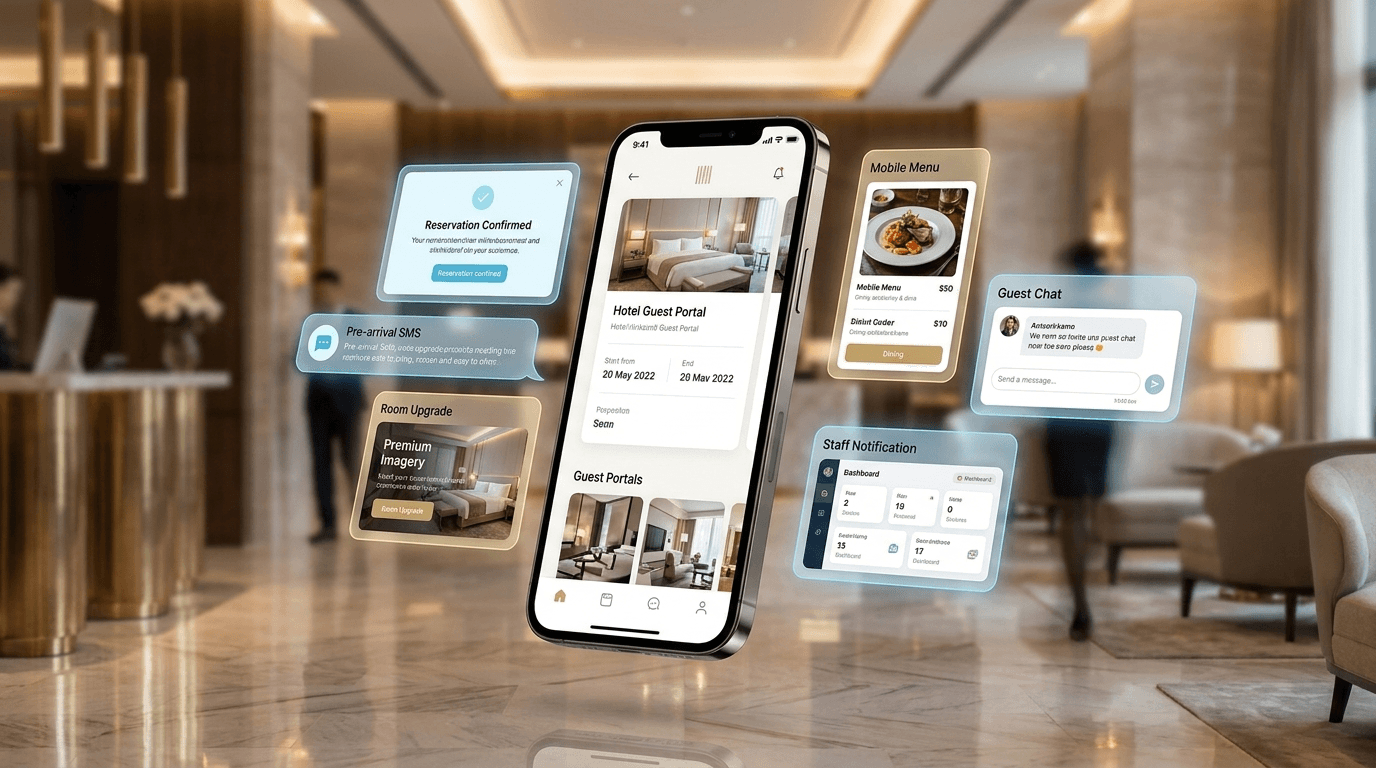
Hotels move beyond one-time front desk upselling by turning the entire guest journey into a revenue opportunity.
Instead of waiting until check-in, hotels can engage guests from the moment a reservation is confirmed. With pre-arrival upsellsolutions, guests can receive personalized SMS or email offers, open a mobile web experience without downloading an app, and choose upgrades, amenities, transportation, experiences, or other add-ons before they arrive.
During the stay, digital hotel compendium, mobile menus and F&B ordering, multi-channel guestchat , QR codes, local guides, and AI-powered hotel chat help guests discover services faster while reducing repetitive front desk questions.
This gives hotel teams more time to focus on high-value service while creating more opportunities for ancillary revenue.
For hotels facing staffing pressure, this is the real value:
How to Launch a Hotel Front Desk Upselling Program in 7 Days
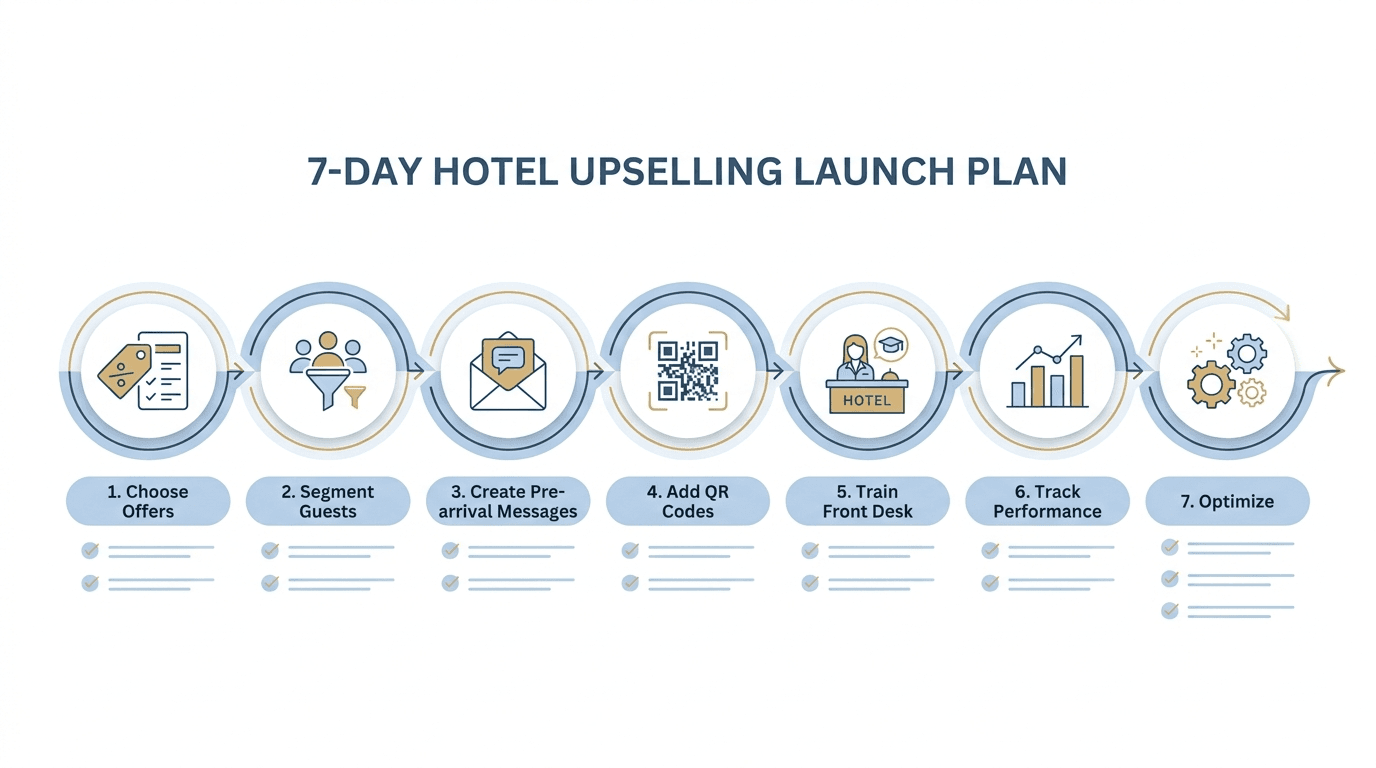
Hotels do not need a complicated rollout to start increasing guest spending.
Here is a simple 7-day launch plan.
Day 1: Choose Your Top 5 Offers
Start with offers that are easy to fulfill.
Examples:
- Room upgrade
- Early check-in
- Late checkout
- Breakfast
- Parking
Do not start with 25 offers.
Start simple.
Day 2: Segment Your Guests
Different guests want different things.
Business travelers may want early check-in and breakfast. Leisure guests may want room upgrades and local experiences. Families may want parking, breakfast, and late checkout.
Segmentation makes upselling feel personal.
Day 3: Create Pre-Arrival Messages
Send guests a helpful message before they arrive.
Example:
“We’re excited to welcome you soon. Before you arrive, you can view available upgrades, breakfast options, parking, and local recommendations here.”
This turns the pre-arrival window into a revenue opportunity.
Day 4: Add QR Codes and Digital Touchpoints
Place QR codes where guests naturally look:
- Confirmation email
- Pre-arrival SMS
- Lobby signage
- Front desk counter
- Guest rooms
- Restaurant tables
- Elevator signage
- In-room welcome card
Each QR code should lead to a mobile-friendly guest experience.
Day 5: Train the Front Desk Team
Training should focus on helping, not pushing.
Teach the team to:
- Mention value before price
- Personalize the offer
- Keep scripts short
- Use availability as urgency
- Confirm digital requests
- Avoid aggressive selling
The goal is not to turn the front desk into a sales team.
The goal is to make revenue opportunities easier to recognize and easier to complete.
Day 6: Track Performance
Measure what matters.
Track:
- Upsell conversion rate
- Revenue per upsell
- Revenue per occupied room
- Most accepted offers
- Best-performing guest segments
- Front desk workload reduction
- Guest satisfaction
- Mobile engagement
With hotel trend analytics, properties can understand guest behavior, on-property interest, and off-property exploration patterns.
Day 7: Optimize
After one week, review the results.
Remove offers that do not convert. Improve wording. Adjust pricing. Test new timing. Add better images. Promote high-performing offers more often.
Upselling is not a one-time campaign.
It is a revenue system.
What Hotels Should Measure
A strong hotel upselling strategy should be measurable.
The most important metrics include:
Upsell Conversion Rate
How many guests accepted an offer?
Average Upsell Value
How much revenue did each accepted offer generate?
Revenue Per Guest
How much did each guest spend beyond the room rate?
Revenue Per Occupied Room
How much ancillary revenue did the hotel generate per occupied room?
Offer Performance
Which offers are the best?
Timing Performance
Did guests convert better pre-arrival, at check-in, or during the stay?
Staff Efficiency
Did digital tools reduce repetitive front desk questions?
Guest Satisfaction
Did upsells improve convenience and experience?
Hotels should not only ask, “Did we sell more?”
They should ask, “Did we make it easier for the guest to buy?”
That is the real difference.
The Future of Hotel Upselling Is Not a Harder Sales Pitch
The future of hotel upselling is not about making front desk agents more aggressive.
It is about making the guest journey smarter.
The best hotel front desk upselling strategy gives guests the right offer at the right time, through the right channel, without creating more work for the team.
That means:
- Pre-arrival upsells before the guest reaches the lobby
- Mobile menus that increase food and beverage visibility
- Digital compendiums that reduce front desk questions
- Guest messaging that keeps communication simple
- QR codes that turn physical spaces into revenue points
- AI hotel chat that helps guests find what they need faster
- Front desk scripts that feel helpful, not forced
This is how hotels increase guest spending without adding staff.
They stop relying on one conversation at check-in.
They build a revenue journey.
Increase Guest Spend Without Adding Staff
Your hotel already has rooms, amenities, services, menus, and guest touchpoints.
The missing piece is a smarter way to connect guests with those offers before they must ask.
NexGen Guest helps hotels increase guest spend through pre-arrival upsells, digital compendiums, mobile menus, guest messaging, AI hotel chat, QR codes, and no-app mobile guest engagement.
That means guests get a faster, more convenient experience.
Your staff get fewer repetitive requests.
Your hotel gets more revenue from the guests you already have.
FAQs
What is hotel upselling software?
Hotel upselling software helps hotels present, manage, automate, and track guest offers across the guest journey. It can support pre-arrival offers, mobile guest portals, digital compendiums, guest messaging, QR codes, and reporting so hotels can grow ancillary revenue without adding manual work.
Does hotel upselling improve guest experience?
Yes, when done correctly. Hotel upselling improves the guest experience when offers are relevant, convenient, and genuinely useful. A good upsell should feel like a service enhancement, not a sales pitch.
How can hotels increase guest spending without adding staff?
Hotels can increase guest spending without adding staff by using pre-arrival upsell messages, digital compendiums, mobile menus, QR codes, guest messaging, and automated guest engagement tools. These systems present offers to guests at the right time without requiring the front desk team to manually sell every option.
What is the difference between upselling and cross-selling in hotels?
Upselling encourages guests to purchase a higher-value version of something they already booked, such as upgrading from a standard room to a suite. Cross-selling offers additional services, such as breakfast, parking, spa treatments, airport transfers, or dining reservations.