


In the hospitality industry, sustainability has moved beyond slogans and towel cards. It’s growing in priority for travelers, making it a selling point factor for hotels. While focusing on operational efficiency, guest comfort, and measurable business outcomes in the first place, today’s green hotels and eco-friendly hotels are expected to balance them equally with environmental responsibility. Nowadays in Hotel Tech, the competitors have leaned hard into ‘Paperless future’, pushing digital guest journeys that eliminate printed form and compendiums.
This guide is designed for hotel owners, operational leaders, general managers, and sustainability teams to understand how embracing ecofriendly practices can attract growing market and enhances your hotel’s reputation alongside contributing towards a healthier planet. It’s not just about how you act it is like adopting more eco-friendly practices for your business could mean more in the longer run and shows how NexGen Guest fits into the parts that most hotels miss.
What Is a Green Hotel?

A green hotel is a property committed towards promoting sustainability alongside protecting the environment by incorporating eco-friendly practices. Eco hotels are the other name of green hotels, also known as environmentally friendly hotels.
- Reduces environmental impact through operations, not one-off initiatives
- Tracks progress with a few clear KPIs
- Builds sustainability into SOPs and training
- Communicates clearly so guests understand what’s happening (without guilt or greenwashing)
Green hotel vs sustainable hotel vs eco hotel
| Term | What it usually implies | What to look for |
| Green hotel | Environmental impact focus | Energy/ water use data |
| Sustainable hotel | Broader impact including social | Supplier and community standards |
| Eco hotel | Guest-facing eco positioning | Certifications + guest programs |
Eco friendly hotels are the terminology often used interchangeably with green hotels but emphasize different operational aspects, from energy programs to guest-facing sustainability experiences.
Why Eco-Friendly Practices Matter
Eco-friendly practices are referred to as smarter operations; it let the hotels to reduce ongoing costs by:
- Lower fuel and electricity use
- Cuts water and sewer charges
- Preventive maintenance improved
- Reduced waste disposal expenses
These efforts pay back through improved operating performance and reduced spending both.
Guest expectations and brand trust
Travelers, especially eco-conscious and corporate ones, seek transparent and measurable sustainability claims.
Why transparency beats vague claims:
- Guest research environmental policies before booking.
- Under 25 age group, 44% of guests actively investigate hotels environment and social practices.
- Corporate travel policies increasingly mandate eco-certified accommodations.
- Sustainability credentials are always highlighted by third-party review sites.
Sustainability stories need to be validated by data, not just good intentions.
Competitive advantage
- Certifications, corporate travel, group business
The stakes are rising. Corporate clients and government entities require eco-certified hotels for employee travel.
Properties with recognized certifications can:
- Not just attract they can get premium rates from eco-conscious travelers
- Win corporate contracts that requires sustainability compliance
- Can compete and get differentiated in saturated markets.
- Build stronger brand loyalty among younger demographics.
Suggested on-page element:
- “Benefits vs challenges of becoming an ecofriendly hotel”
| Benefits | Challenges |
| 12% average revenue increase | Initial capital investment required |
| 26% reduction in energy costs | Time needed for certification processes |
| Enhanced brand reputation | Staff training and culture change |
| Access to corporate/group business | Ongoing compliance and reporting |
| Reduced operating expenses | Potential guest education needed |
| Competitive differentiation | Supply chain modifications |
The 5 Pillars of Eco-Friendly Hotel Operations
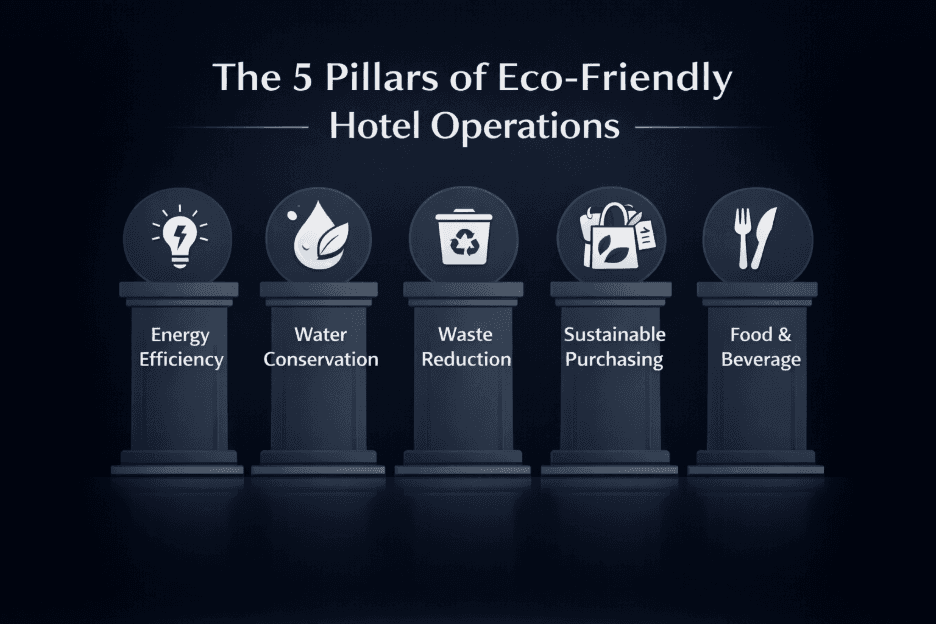
1) Energy efficiency
Reducing power consumption without compromising guest comfort is known as Energy efficiency. Around 8% of global CO2 emissions are the hospitality industry responsible for, making the energy management priority and critical operational for the environment.
Quick wins:
- LEDs are used for lighting throughout the property.
- Occupancy sensors in meeting rooms, corridors, and back-of-house areas.
- Smart thermostats with setback schedules
- Power strips that shut off standby power in guest rooms
Medium:
- HVAC system tuning and preventive maintenance programs
- Building envelope improvements (insulation, window films)
- Energy audits to identify inefficiencies
- Solar panel installations or renewable energy purchasing agreements
Metrics:
- kWh per occupied room (monthly baseline vs. actual)
- Peak demand costs and load management
- Energy cost as percentage of revenue
- Year-over-year consumption trends
2) Water conservation
Water consumption can be reduced by operational practices and infrastructure improvements. On average, hotel rooms use up to 73000 gallons of water per year.
Quick wins:
- Low-flow showerheads and aerators (maintain pressure perception)
- Toilet replacements or retrofits
- Regular leak detection and repair programs
- Linen and towel reuse programs (done right, with guest choice)
Medium:
- Laundry optimization: ozone systems, high-efficiency machines
- Irrigation controls and drought-resistant landscaping
- Greywater recycling systems where feasible
- Pool and spa water management systems
Metrics:
- Liters/gallons per occupied room
- Laundry loads per room cleaned
- Water cost per room night
- Leak repair response times
3) Waste reduction and circularity
Moving toward circular economy principles where waste is minimized, materials are reused, and resources stay in use as long as possible. Hotel guests create about 2.5 pounds of waste per day.
Quick wins:
- Eliminate single-use plastics where possible.
- Implement refillable in guest rooms.
- Set up sorting stations for staff areas.
Medium:
- Comprehensive food waste tracking and reduction program
- Composting for organic waste
- Donation partnerships for linens, furniture, and supplies
- Packaging requirements for vendor contracts
Metrics:
- Total waste volume per occupied room
- Diversion rate: percentage recycled or composted vs. landfilled
- Food waste by outlet (prep waste vs. plate waste)
- Cost savings from waste reduction
4) Sustainable purchasing and housekeeping
Making purchasing decisions that favor environmentally responsible products and vendors while maintaining operational standards.
Key Areas:
- Eco-friendly cleaning chemicals with third-party certifications
- Paper products: recycled content, sustainable forestry
- Vendor sustainability standards and audits
Metrics to Track:
- Percentage of spend on certified sustainable products
- Chemical usage rates per room cleaned
- Vendor compliance with sustainability standards
- Staff exposure to harmful chemicals (safety metric)
SOP Integration:
- Update purchasing guidelines with sustainability criteria
- Train housekeeping staff on proper dilution ratios
- Create approved vendor lists with sustainability requirements
- Build green procurement into contract negotiations
5) Food & beverage sustainability
Reducing F&B's environmental footprint through sourcing, preparation, and waste management—while maintaining profitability and guest satisfaction.
Operational Focus Areas:
- Local and seasonal sourcing where it makes operational sense
- Menu engineering to reduce waste and highlight sustainable options
- Portion control and prep planning to minimize waste
- Surplus donation programs
Metrics to Track:
- Food cost variance (waste impacts costs)
- Plate waste estimates by outlet
- Donation totals (pounds/meals)
- Composting volumes
- Local sourcing percentage
SOP-Level Practices:
- Par level optimization to prevent spoilage
- Cross-utilization of ingredients across menus
- Staff training on portion accuracy
- Prep-to-order protocols for perishables
Eco-Friendly Practices Guests Actually Notice
Comfort-first sustainability (avoid guest irritation)
Making a sustainable choice is the golden rule for comfort-first sustainability. If guests need to sacrifice comfort or convenience, you will fail your program and create a negative impact.
Do This:
- Install refillable water stations with attractive glassware.
- Poor-quality refills feel cheap to use quality ones.
- Make recycling bins intuitive with clear labels and visual guides
- Set thermostats to comfortable defaults, not extreme energy-saving modes
Don’t Do This:
- Remove amenities without explanation
- Make guests feel guilty about their choices
- Create complicated recycling systems
- Sacrifice service speed in the name of sustainability
In-room touchpoints
Visible, Valuable Sustainability Measures:
- High-quality refillable amenities (shampoo, conditioner, lotion)
- Clear recycling bins with simple instructions
- Thermostat education cards explaining how they work
- Digital compendiums replacing printed materials
- Reusable water bottles with filling station maps
Keep your communication tone focused on benefits rather than lectures.
Pre-arrival and during-stay communication
Short scripts that explain what you do and why (no guilt messaging)
- Pre-Arrival Email: "We're committed to reducing waste while enhancing your experience. You'll find refillable premium amenities, paperless check-in, and optional daily housekeeping—all designed to give you control and comfort."
- In-Room Card: "Fresh towels when you need them: Hang towels you'll use again; place on the floor for replacement. It's your choice."
- Digital Compendium Intro: "Everything you need is at your fingertips—hotel services, local recommendations, and amenities—all without paper waste."
- F&B Menu Note: "We partner with local farms for seasonal ingredients. Taste the difference while supporting our community."
- Checkout Message: "Thank you for joining our sustainability journey. Your stay helped us save [X gallons] of water and [Y pounds] of waste."
Guest-Friendly Messaging Principles:
- Lead with benefits (convenience, quality, experience)
- Offer choice, never mandate
- Use specific numbers when possible ("Saves 30 gallons per stay")
- Avoid guilt-tripping or virtue signaling
- Make it easy to participate without thinking
Certifications and How to Avoid Greenwashing
When Certification Is Worth It
Certification Benefits:
- Third-party validation builds guest trust
- Access to corporate and group markets that require it
- Structured frameworks for continuous improvement
- Marketing differentiation in competitive markets
- Staff engagement and pride
What Certifications Typically Check:
- Energy and water consumption data
- Waste management and diversion rates
- Purchasing policies and vendor standards
- Staff training and engagement
- Guest communication and education
- Community and social impact (some programs)
- Regular audits and documentation
Major Hotel Sustainability Certifications:
| Certification | Best For | Key Focus | Requirements |
| LEED | New builds, major renovations | Building efficiency, design | Third-party audit, point-based levels (Certified to Platinum) |
| Green Key Global | Operational improvements | Day-to-day operations, guest experience | Annual audit, 5-level rating system |
| Green Globe | Comprehensive sustainability | 360° approach: environmental, social, economic | 44 criteria, 380+ indicators, annual audit |
| EarthCheck | Tourism-specific properties | Benchmarking and continuous improvement | Annual certification, science-based benchmarks |
| BREEAM | Building performance | Construction and operational efficiency | International building assessment |
FAQs
- What makes a hotel eco-friendly?
An eco-friendly hotel systematically reduces its environmental impact through measurable practices across energy, water, waste, purchasing, and operations. This includes tracking consumption data, implementing efficiency improvements, using sustainable products, and educating both staff and guests. True eco-friendly hotels publish their metrics and pursue third-party certifications rather than making vague environmental claims.
- Are green hotels more expensive?
Not necessarily. While some luxury eco-resorts command premium prices, many green hotels offer competitive or identical rates to conventional properties. In fact, building a LEED-certified hotel only cost 1-2% more than a conventional one, and operational savings often offset any initial investment. Many travelers are willing to pay slightly more for certified sustainable properties, but price competitiveness remains possible through efficiency savings.
- What are the easiest eco-friendly practices to start with?
The easiest quick wins include LED lighting conversion, low-flow water fixtures, linen and towel reuse programs, eliminating single-use plastics, setting up recycling stations, and implementing digital check-in and compendiums (where NexGen Guest excels). These initiatives require minimal investment, short payback periods, and are immediately visible to guests.
- How do ecofriendly hotels reduce water usage?
Hotels reduce water consumption through low-flow showerheads and faucets that maintain pressure perception, high-efficiency toilets, smart irrigation systems, optional linen and towel replacement programs, laundry system optimization with ozone or high-efficiency machines, leak detection and rapid repair programs, and drought-resistant landscaping. The result: LEED buildings use 30% less water than conventional buildings.
Conclusion
Sustainability isn’t about perfection; it’s about progress. The hotels winning in this space aren't necessarily the ones with the biggest budgets or newest buildings. They are the ones that take a measurable and systematic approach while reducing the environmental impact and improving guest satisfaction alongside operational efficiency.
Hotels that implement sustainable practices report an average increase of 12% in revenue, while simultaneously cuts down the energy costs up to 26% and water usage by 30%. Most importantly, 83% of travelers prioritize sustainability in tourism, making it a competitive necessity.
Actions to Begin this Month
Measure your Baseline – Improvement begins within. Track energy and water per occupied room and waste diversion rate for upcoming 30 days. These three metrics will guide your entire sustainability strategy.
Implement One Quick Win Per Pillar- Choose the easiest, highest-impact improvement in each of the 5 pillars. For example: LEDs in corridors (energy), low-flow showerheads (water), eliminate plastic straws (waste), switch to certified cleaning products (purchasing), and implement plate waste tracking (F&B).
Go Digital Where It Matters- Replace printed compendiums, registration forms, and checkout folios with digital alternatives. This is where platforms like NexGen Guest provide immediate impact eliminating thousands of printed pages while improving guest experience and operational efficiency.
Where NexGen Guest Fits
Paperless transformation isn't just about sustainability; it's about operational efficiency that happens to be eco-friendly. NexGen Guest's mobile-first platform eliminates the operational gaps most hotels face:

- Digital compendiums that replace thousands of printed pages annually
- Pre-arrival engagement that reduces front desk workload and paper forms
- Mobile guest services that streamline communication without printing
- QR-enabled amenities that eliminate in-room paper materials
- Real-time guest feedback that helps you improve sustainability programs
The result? Less waste, better guest experience, and measurable operational improvements all without downloading apps or training guests on new systems.
Ready to make your hotel more sustainable while improving operations?

Contact our NexGen Guest team to see how a paperless guest journey can reduce your environmental footprint starting this month.
For hotel owners and operators looking to balance sustainability with profitability, the path forward is clear: start measuring, implement quick wins, and leverage technology to eliminate waste where it matters most. The hotels that thrive in the next decade won't just talk about being green; they will have the data to prove it.